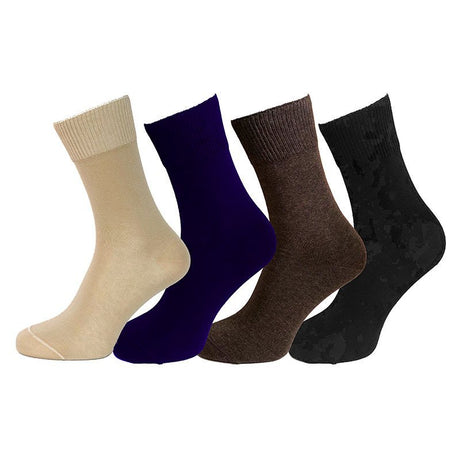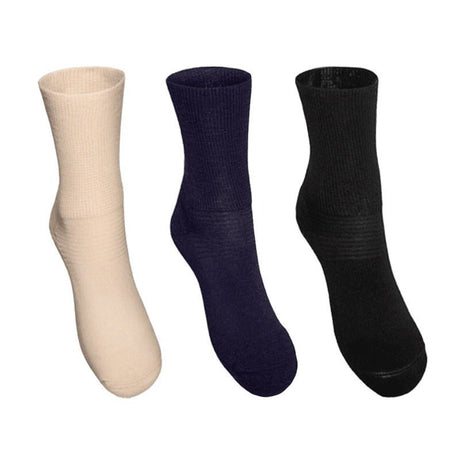




Do you have diabetes, swollen feet, or simply need socks that don't pinch? Diabetes socks might be the perfect solution for you. Here, you'll find everything you need to know about what they are, how they work, and which type suits you best.
We all know the feeling of socks that rub against your toes or leave red marks on your ankles. For most, it's just a mild annoyance. But for those with diabetes, this pressure can lead to wounds that are hard to heal. Diabetes socks are designed specifically to prevent this issue.
And they're not just for diabetics. These socks are a hit with anyone who wants soft, comfortable socks without tight elastic, whether due to swollen legs, sensitive feet, or simply a preference for comfort.
Why are feet particularly vulnerable in diabetes?
Diabetes can gradually affect the nerves in your feet, a condition known as peripheral neuropathy. This means you might lose some sensation in your toes and soles. Without feeling a shoe rubbing or a seam pressing, sores can develop without notice.
Additionally, diabetes can impair blood circulation in the legs, making it harder for the body to heal even small injuries. It's this combination of reduced sensation and poor healing that makes foot care so crucial for diabetics.[1]
Diabetic neuropathy is one of the most common complications of diabetes and can occur without obvious symptoms in the beginning. Regular foot checks are recommended for anyone with diabetes.
What makes diabetes socks different?
A diabetes sock isn't just a soft sock. It's designed with three specific features that protect vulnerable feet:
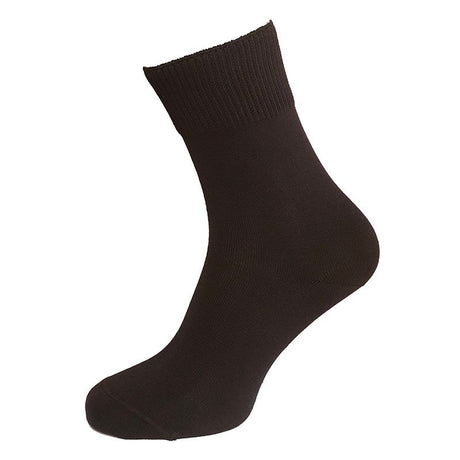
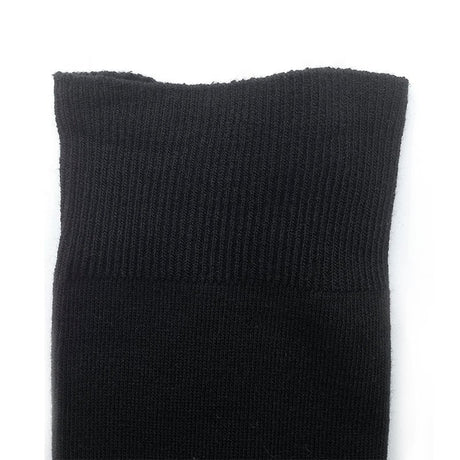
- No tight elastic bands. The wide, loose cuff fits comfortably around the ankle without constricting and restricting blood flow.
- No internal seams. Seams near the toes can rub and cause blisters. Diabetes socks are either seamless or have very flat seams.
- Breathable materials. Cotton, bamboo, and other natural fibers keep feet dry and reduce the risk of fungal infections and irritation.
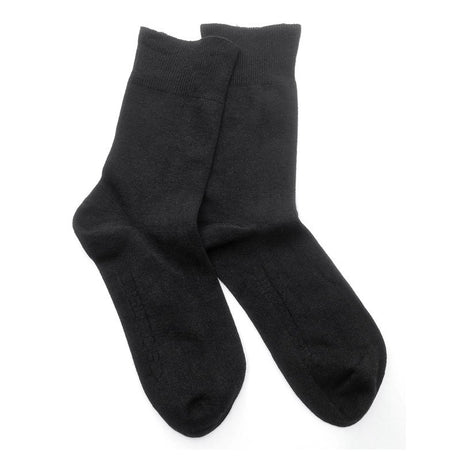
A good pair of diabetes socks feels almost invisible. They stay put without squeezing, rubbing, or slipping down.
Cotton or bamboo: What should you choose?
The two most common materials for diabetes socks are cotton and bamboo viscose. Both are excellent choices, but they have slightly different benefits.
Cotton socks are durable, easy to wash, and provide a classic, soft feel. They're great for everyday use and come in various colors and sizes.
Explore our non-elastic diabetes socks →
Bamboo socks are naturally antibacterial and moisture-absorbing, making them especially suitable for those with sweaty or odorous feet. Bamboo viscose is also temperature-regulating, keeping feet fresh in summer and warm in winter.
Explore our bamboo diabetes socks →
Unsure about the size? Measure your foot and compare it with the size guide on the product page. A diabetes sock should fit loosely, but not so loose that it slips down the ankle.
Who can use diabetes socks?
While diabetes socks are obviously ideal for those with diabetes, they are actually beneficial for many others. Here are some situations where they make perfect sense:
- You have swollen ankles or legs and find that regular socks leave marks.
- You have poor blood circulation and need socks that don't squeeze.
- You have sensitive feet and react to seams or synthetic materials.
- You are older and prefer socks that are easy to put on and take off.
- You simply love comfortable socks without tight elastic.
What about sock length?
Diabetes socks come in three lengths, depending on your needs and the season. Ankle socks are short and great for summer when you want more air around your legs. Regular socks are the most common type and suitable for all seasons. Knee-high socks are long and particularly helpful for those with swollen legs or ankles, as they support the whole lower leg.
If you sit still for long periods on flights or car trips, swollen ankles can be an issue. A knee-length diabetes sock with light compression can help reduce swelling without squeezing like a traditional support sock.
Browse our full range of diabetes socks
We offer diabetes socks in many varieties, from classic cotton to soft bamboo models, in various colors, sizes, and lengths. All are designed with the same core principles: no tight elastic, no irritating seams, and materials gentle on sensitive feet.
Browse our full selection of diabetes socks →
References
- Making Diabetes Easier. (2026). Diabetes and Foot Health: How to Take Care of Your Feet. makingdiabeteseasier.com
- Volmer-Thole, M. & Lobmann, R. (2016). Neuropathy and Diabetic Foot Syndrome. International Journal of Molecular Sciences. pmc.ncbi.nlm.nih.gov