Hernia Supports and Abdominal Belts
A hernia support—also known as a hernia belt—is used to support the area around a hernia. The design depends, among other things, on where the hernia is located. For example, groin hernia supports may feature pads and adjustable straps, while other types provide support around the abdomen.
An abdominal belt is typically wider and provides support and compression around a larger part of the abdomen. Some models can be used for hernias, while others are also suitable for support after surgery or for other needs.
At Seniorshop, you will find both specialised models for different types of hernias and wider, elastic support belts.
Which Type Should You Choose?
The most important consideration is where you need support. The design varies depending on whether the product is intended for a groin hernia, umbilical hernia or more general abdominal support.
The level of targeted support also varies. Some models have pads positioned directly over the hernia, while elastic abdominal belts distribute compression across a larger area.
Always check the individual product description to confirm the intended use, fit and size.
Support for Groin Hernias
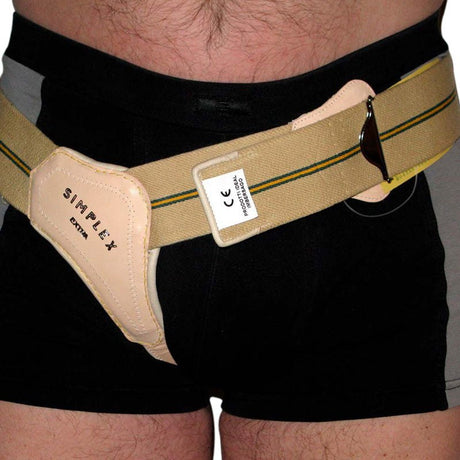
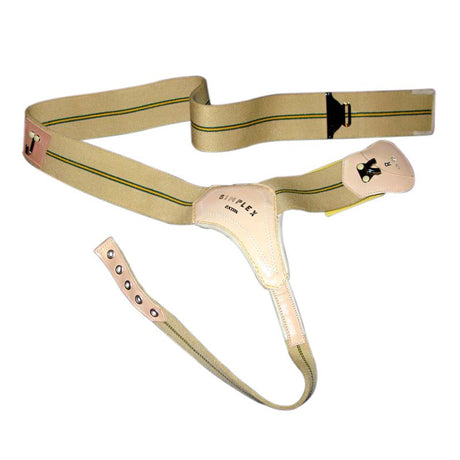
A groin hernia appears as a bulge in the groin. A hernia support for this area may have one or more pads, which are positioned over the hernia and held in place with straps around the hips and thighs.
The range includes both single-sided and double-sided models. If you need support on one side, check whether the model is designed for the right or left side. A double-sided version provides support on both sides.
A hernia belt does not treat the hernia itself. If you have or suspect that you have a hernia, you should have it assessed by a doctor and seek advice about the appropriate treatment and use of support.
Support for Umbilical Hernias
An umbilical hernia appears as a bulge around the navel. A different type of support is used here than for a groin hernia because the area requiring support is located on the abdomen.
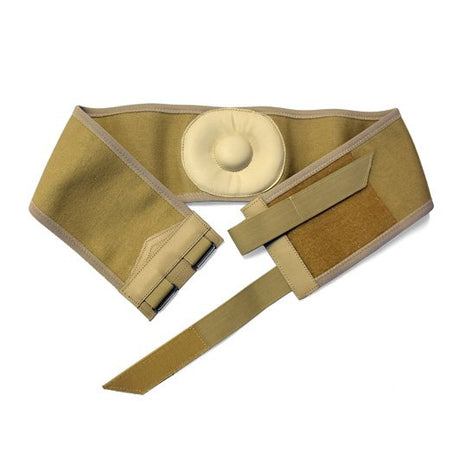
A model for an umbilical hernia may consist of a belt around the abdomen with a pad positioned over the hernia. This provides more localised support around the navel.
Always choose a model designed for the area and type of hernia you have been diagnosed with.
Elastic Abdominal Belts
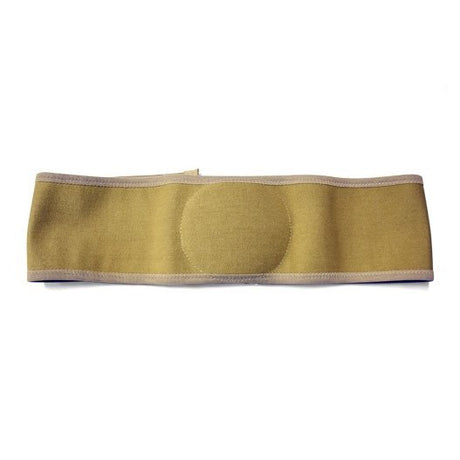
An elastic abdominal belt provides support and compression around a larger part of the abdomen. It therefore differs from more targeted models with pads for areas such as the groin or navel.
The belts are available in different heights, sizes and materials. The model that suits you best depends on both your needs and where on the abdomen you want support.
Some elastic models can be used for specific types of hernia. It is therefore important to check the intended use of the specific product rather than choosing solely based on the term abdominal belt, hernia support or hernia belt.
Abdominal Belts After Surgery
In some cases, a support belt can be used after surgery in the abdominal area. The purpose and need depend, among other things, on the type of surgery and the individual’s situation.
If you need support after surgery, follow the recommendations of the hospital, doctor or other healthcare professional. They can advise you on which type is appropriate and how it should be used.
Ostomy Belts
Some models are designed for use with an ostomy. Seniorshop’s range includes an ostomy belt that can be cut to create an opening tailored to the position of the stoma.
Not all elastic belts are designed for this purpose. Always check the product description and instructions for the specific model.
How to Find the Right Size
The correct fit is important for both comfort and support. The measuring method depends on the product’s design.
For some models, the size is based on the measurement around the hips, while others use the waist measurement. Always use the size guide on the individual product page rather than simply choosing the size you usually wear in clothing.
The belt should fit as described in the product instructions. If you are unsure which size or type suits your needs, seek guidance before making your choice.
What Should You Look For?
When comparing models, it is particularly relevant to consider where the support is positioned, how the belt is designed and how the size is measured.
For a groin hernia, it may be important to choose between right-sided, left-sided or double-sided support. For an umbilical hernia, the design is different, while a wide elastic abdominal belt distributes support across a larger area.
Check the product specifications for information about use, size, measurements, material and washing. This allows you to choose based on the product’s actual features rather than the product name alone.


 Get help here


 Up to 34% off