Each year, half of all Danes experience back pain. While it can be uncomfortable, there’s a lot you can do to help yourself. In this guide, you’ll find practical tips on caring for your back, as well as advice on when assistive devices can truly make a difference.
Your back is the body’s central support structure. It keeps you upright as you walk, sit, and lift — and it’s working almost constantly. So it’s understandable that it sometimes lets you know when it needs attention.
Most back pain is what doctors refer to as "nonspecific lower back pain." While that sounds technical, it simply means there’s nothing seriously wrong. Pain usually occurs when your back’s muscles and joints become overworked, stiff, or subjected to prolonged strain in a poor position.
Movement is the best thing you can do
It might seem surprising, but the best remedy for back pain is to keep moving. Not heavy lifting or strenuous exercise—just gentle, regular activity. A daily walk, some light swimming, or even getting up from your chair regularly can make a big difference.
Physical therapist and researcher Inge Ris from the University of Southern Denmark puts it this way: your back recovers through movement. In contrast, resting or staying in bed may actually prolong the pain and make recovery more difficult.
Set an alarm every 45 minutes while you’re sitting. Stand up, take a quick walk around the room, and stretch your back. This is one of the simplest and most effective steps you can take for your back.
When can a back support help?
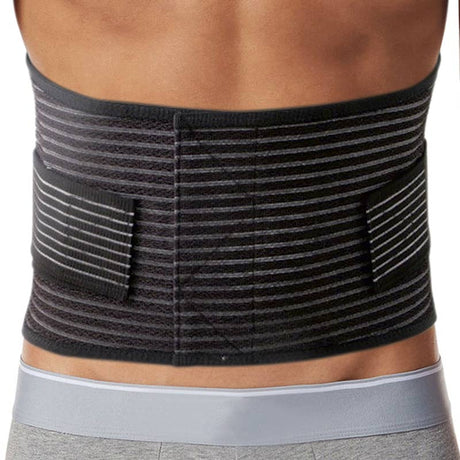
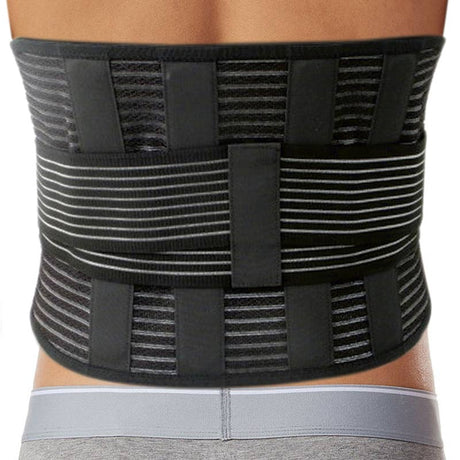
A back support or corset isn’t a cure on its own, but it can provide helpful support during periods when your back feels especially vulnerable. For example, during recovery after an injury, when lifting heavy objects, or if your work requires sitting or standing for prolonged periods.
The purpose of an active back brace is to help you maintain good posture and reduce pressure on the spine while your body heals or adapts.
It’s important not to use a back support as a replacement for movement or strengthening exercises. Use it for extra support when needed, but continue to stay active and strengthen your back muscles alongside.
Explore our selection of back supports and corsets →
Your sitting position matters
Many cases of back pain begin at the desk, on the couch, or in the car. Prolonged sitting often causes us to slouch, putting unnecessary strain on the lower back and lumbar vertebrae. Good sitting posture doesn’t mean sitting stiffly, but regularly changing positions that keep the natural curve of your back intact.
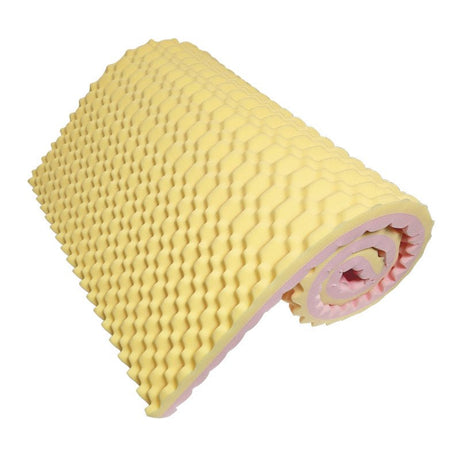
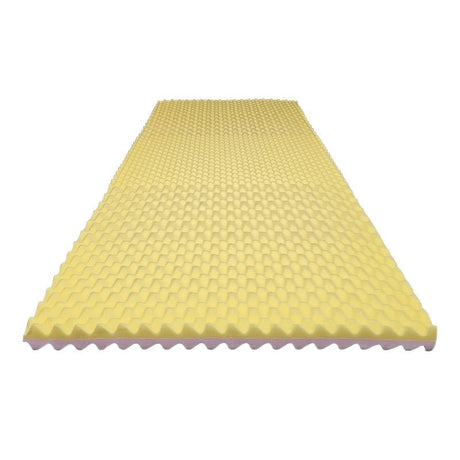
A seat cushion can help distribute pressure more evenly and make it easier to maintain good posture for longer periods. This is especially helpful if you spend a lot of time sitting—whether it’s at the dining table, in a favorite chair, or in a wheelchair.
The pressure on your lower back discs is highest when you sit hunched forward. A seat cushion with a gentle forward slope helps keep your lower back in its natural curve and significantly reduces strain.
Browse our collection of seat cushions →
Everyday tips for your back
Beyond movement and helpful tools, simple daily habits can make a real difference for your back over time.
- Lift with your legs, not your back. Hold items close to your body and bend at the knees, not at the waist.
- Change position regularly. Try not to sit or stand in the same position for more than 45 minutes at a stretch.
- Sleep well. A supportive mattress and sleeping position are important for back health. Sleeping on your side with a pillow between your knees is recommended.
- Maintain a healthy weight. Extra weight increases the strain on your spine, especially on your lower back.
- Strengthen your back muscles. Even simple exercises such as planks, pelvic tilts, and walking help build the muscles that support your back.
Contact your doctor if you experience pain radiating down your leg, you lose strength or sensation, or if pain disrupts your sleep. These could be signs that need medical evaluation.
Back pain isn’t a lifelong sentence
It’s reassuring to know that most back pain improves on its own within a few weeks. Even if you’ve had back pain for a long time, there are many ways to improve your situation. Staying active, cultivating good habits, and using the right support can all help you enjoy a more comfortable, pain-free life.
If you have questions about which back support or seat cushion is right for you, our customer service team is always here to help.