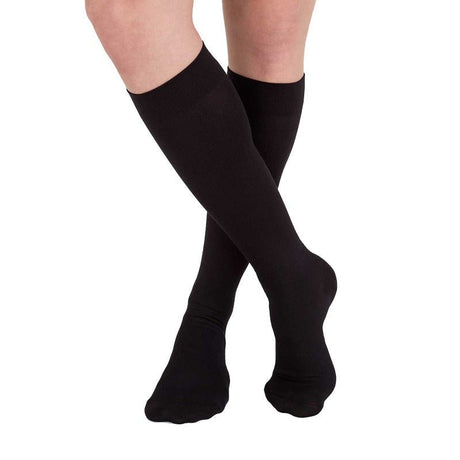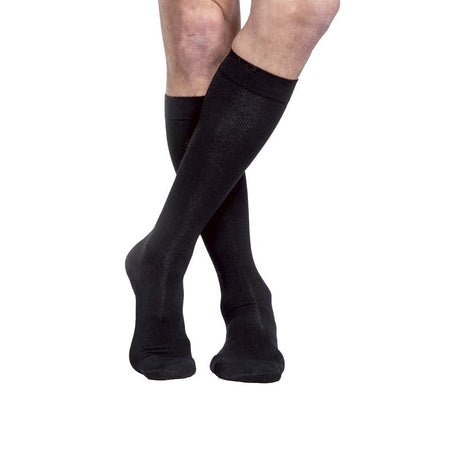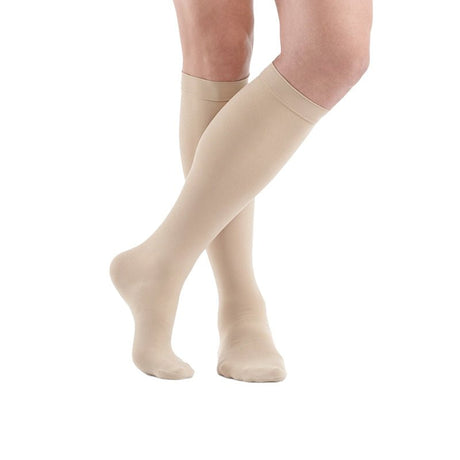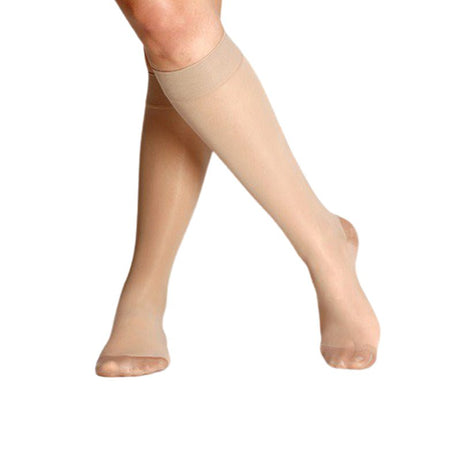
Not all compression socks are the same. They come in four different strengths—from gentle, everyday support to the firm, prescription-only options. With the right level, you'll notice a real difference, and your socks won’t feel overly tight or uncomfortable. Here, we’ll give you a clear overview: what the four compression classes include, who they’re for, and how to choose the right one for your legs.
Compression works by applying the most pressure at the ankle, gradually decreasing it up the leg to the knee or thigh. This gentle squeeze helps your blood flow back to your heart, so your legs feel lighter and more energized all day. It's simple, effective support—whether you’re on your feet a lot, sit for long periods, are pregnant, or just want to care for your legs as you get older.
The Four Compression Classes—and What They're For
The strength of compression socks is measured in mmHg (millimeters of mercury), which shows how firmly the sock hugs your ankle. Higher numbers mean stronger compression. The socks are categorized into four classes:
- Class 1 (15–21 mmHg) – Light compression: The most common and suitable for most people without a doctor's advice. Great if you feel mild tiredness or swelling in your legs after a long workday, spend lots of time on your feet, or experience mild swelling during pregnancy. Many use them preventively, simply for lighter-feeling legs every day.
- Class 2 (23–32 mmHg) – Moderate compression: Noticeably stronger pressure, usually for more pronounced issues like varicose veins, diagnosed venous insufficiency, or after surgery. Usually recommended by a doctor or nurse, and best used with professional guidance.
- Class 3 (34–46 mmHg) – Firm compression: A specialized class for more serious conditions such as lymphedema, severe venous insufficiency, or venous leg ulcers. Always prescribed and fitted by healthcare professionals when medically necessary.
- Class 4 (over 49 mmHg) – Extra firm compression: The strongest class, almost exclusively for severe lymphedema and other complex lymphatic conditions. Only to be used under medical supervision and typically in close collaboration with healthcare staff.
Compression is graduated—the pressure is highest at the ankle and decreases up the leg. This gradual release activates the “venous pump,” helping your blood return efficiently to your heart.
Who Benefits Most From Compression Socks?
Although Class 1 compression socks are suitable for most, some groups benefit even more:
- If you stand or walk a lot: Whether at work, in the garden, or running errands, long periods on your feet can lead to tired, heavy legs by evening.
- If you sit still for long stretches: Desk jobs, lengthy car rides, or flights can slow circulation, causing ankle swelling.
- If you have mild varicose veins or restless legs: Gentle compression can relieve discomfort and help prevent symptoms from worsening.
- If you are pregnant: Your body retains more fluid during pregnancy, and compression socks can bring soothing relief to your legs.
- If you are getting older: As we age, our vein walls naturally lose some elasticity, making it harder for blood to return to the heart. Compression socks help prevent swelling and more serious circulation problems.
If you’re uncertain which class is right for you, Class 1 is a safe place to start for simply wanting lighter-feeling legs in daily life. But if you have diagnosed varicose veins, persistent swelling, or other circulation concerns, always consult your doctor before choosing a higher class.
It’s also useful to know that almost all compression sock users never need more than Class 1. It's both the mildest and most common option—the one most people start with and the one that meets everyday needs with ease. That's why we offer a wide selection of Class 1 socks, plus a smaller range of Class 2 for those who need a bit more support. Classes 3 and 4 are only available by prescription and require individual measurement and fitting, so we don't carry those—you’ll need a specialist store or orthotist.
How to Get the Most From Your Compression Socks
To ensure optimal support from your socks, keep these simple tips in mind:
- Put your socks on in the morning before your legs start to swell.
- Make sure the sock lies smooth against your leg with no folds—wrinkles can cause pressure points and discomfort.
- Wear them consistently throughout the day for the best results, and remove them in the evening.
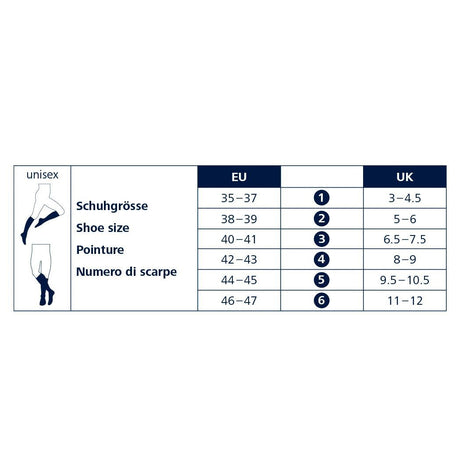
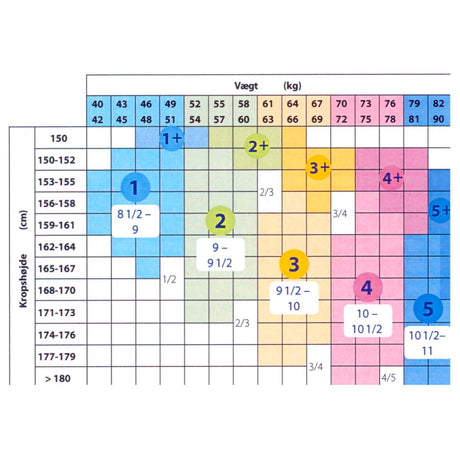
- Choose the correct size—socks that are too tight or too loose won’t deliver the right support.
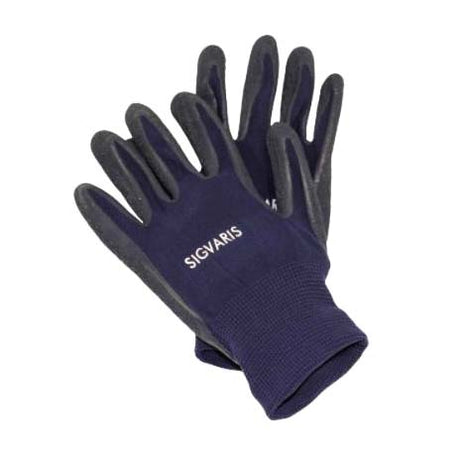
Many people find it a bit tricky to put on compression socks at first, especially with higher compression classes. That’s where handy sock aids come in, making it much easier to put socks on and take them off—protecting your fingers, back, and shoulders too.
We offer a range of Class 1 and select Class 2 compression socks in various colors and lengths, so you can find the perfect fit for both your legs and your lifestyle.
See our range of compression socks →
Find the Right Class for You
Choosing the right compression sock starts with understanding your own needs. For most people, Class 1 is the ideal introduction—it provides gentle, comfortable support for everyday tired legs. If you experience more significant issues, always consult your doctor or nurse so you get compression that truly meets your needs. No matter which class is right for you, the right compression socks are a small investment with big benefits for how your legs feel by day’s end.